
Bringing people to people in a new age
It’s on our phones, desktops, and is integrated into operating systems, third-party apps, and hundreds of web-based applications. It stands between us and those we care about, and it’s about to be obsolete.
Enter the contacts application. Designed to store vital data about the people we interact with in our lives, it still resembles the analog rolodexes it once replaced, with simple functionality and interfaces. People can search for names, addresses and use it with email, calendar, and social apps — but it’s not enough.
Churn! Bang! CRASH! AI, RAG, and tens of new structures and applications have made the legacy apps seem slow and outdated. People want more, and fed by constantly evolving capabilities, and want it a lot faster. There’s every indication that people will move to an AI driven personal assistant, unless the contacts app evolves.
At this point you might ask why keep working on an evolving app, and not just start over. You could of course, at great expense. Yet a revitalized contacts application, enhanced with the features I will suggest, would become a cornerstone in any ecosystem, tempered by real world needs.
Product Vision
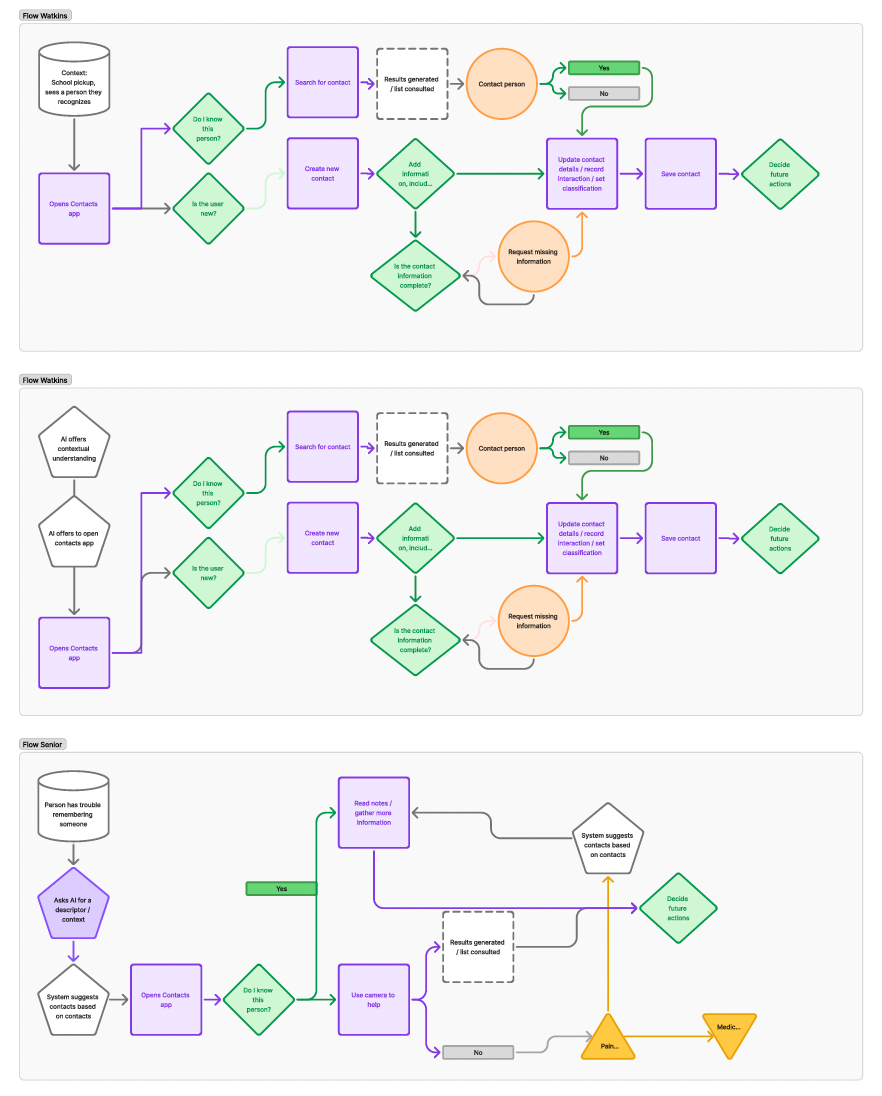
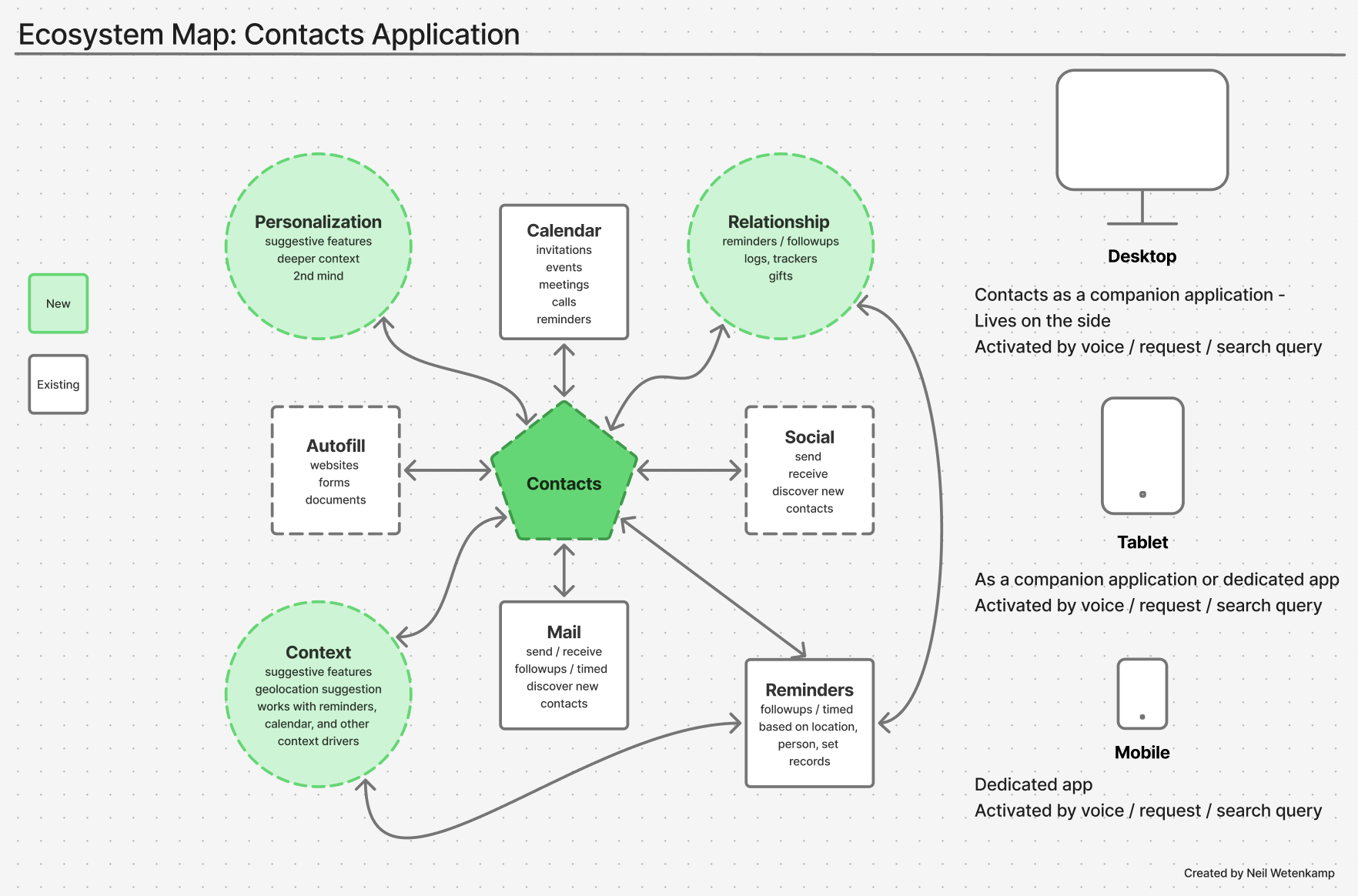
The contacts application, usually nestled inside an OS or mobile platform, is reimagined on the front and back end to allow greater functionality and integration into the users’ lives.
Familiar and new features will be combined to create a new tool for users to not only access those they care about, but to foster better relationships. The new product would be built on a vector database of personal and common data, not only storing required contact information, but can be combined with an LLM to allow for natural language queries, new suggestive features, and deeper search.
Interested in where this came from? Contact me through the links below!
Building the Vision
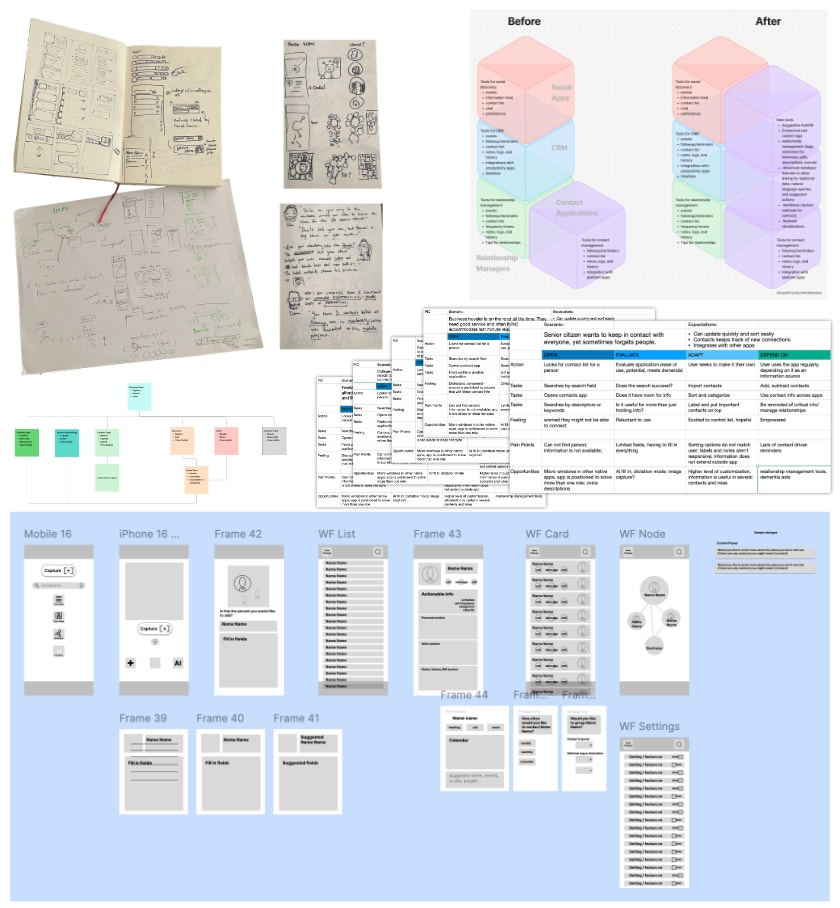
To build out this concept to a testable prototype, I used a product design workflow, utilizing research and concepts from user experience design.
Research, conducted through interviews and gathered online discussions, pointed to a common pain point that I had suspected; people reported that they could not always find the people they needed to, and often wished more details were in the contact record.
The twist in the research came when it became clear that people had low expectations with the application itself. Few people saw it as anything other than a digital rolodex, not expecting that it could be a relationships manager, a social partner, or a business asset.
Wireframing New Roles
From sketches, wireframes, and lofi prototypes in Figma I drafted new roles for the application while preserving the familiar. Relationship features like contact frequency and timers were added alongside social tools like gift records. Business options such as keyword tagging for projects, deeper information inputs for related contacts or recall.
None of this would be revolutionary without the feature that was integral to all the others. Across the designs is contextual intelligence, added layers of information generated by both the user and devices. Locations, contexts, and other information would be embedded into entities that could be clustered in vectors, making all information deeply searchable and even predictive.
Want to see hear how contextual intelligence works? Email me!
ROI
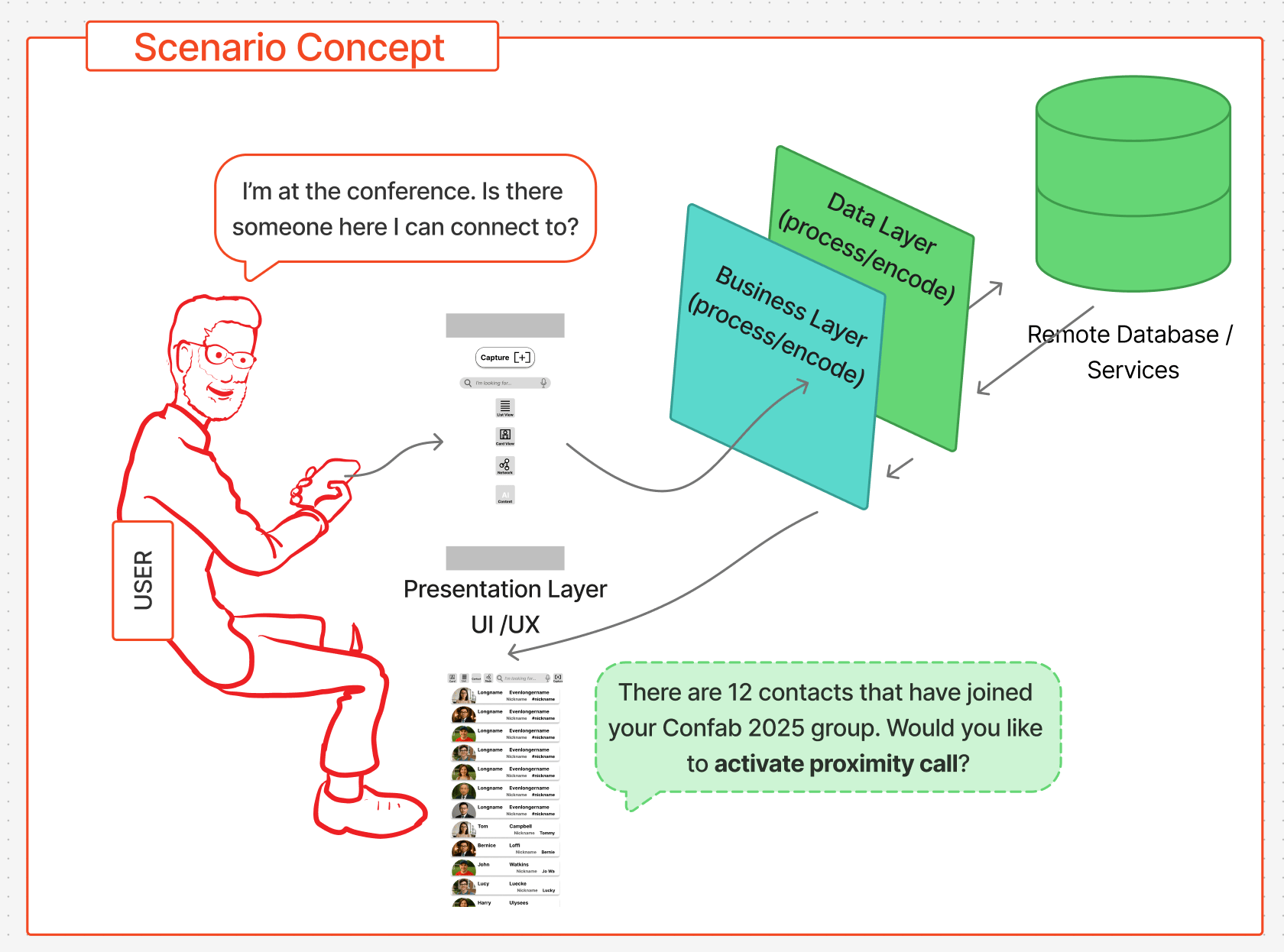
The envisioned contacts application with a vector database is able to do more than add layers of data for the user. It could, in combination with LLMs and AI that is currently being developed, be suggestive.
It could offer guidance on places, people, gifts, and relationships. In cooperation with other applications in the ecosystem, it could suggest meeting locations for upcoming events, complete with personal preferences, or even find a nearby gift at a price point that matches the relationship of that person. There are no shortage of possibilities, and that translates to a good ROI.
At the time of this case study, companies like Apple, Google, and Meta are facing challenges from Perplexity and other AI companies. Each is attempting to hone the ‘everything model,’ a universally useful system that would supplant all others. The nature of search and function are changing, and falling behind can lead to unacceptable user losses.
Whoever can create a platform that rises above, will most likely do it by following first principles to better the user’s lives, and do very well. Bettering people’s lives by bringing them closer — the function of the contacts application — is what this concept proposes, and is high ROI indeed.
Where to Invest
First and foremost, in me. This and other concepts have come from my desire to make the world better, and I am eager to find a place where I can do that. If you have thoughts, questions, or job offers, please feel free to reach out.
For this project, organizations would need to invest in research, both internal and in their respective markets. What is viable for them, and do the users need all the features, or would a subset do? Which product or platform it is would answer some of the critical questions that come up.
Last, in users. As we race toward automation and our tools become more capable, there is an even stronger need for us to embrace our humanity. The social fabrics that keep us together need to be reinforced at a time when our lives center around screens, and it can be as simple as a phone call.
Leave a Reply